How to Choose the Right Builder for Your Project
Picking a home builder is less like buying a product and more like hiring a leadership team for an 8–18 month mission with your money on the line. Skill matters, but so do judgment, communication, scheduling discipline, and the builder’s ability to manage dozens of people and thousands of parts under weather, code, and financing constraints. The right choice keeps stress low, protects your budget, and turns drawings into rooms that feel as good to live in as they look on paper. The wrong one burns time and cash while everyone argues about what should have been decided months ago.
This guide walks you through a professional, step-by-step process to select the best builder for your specific project. You’ll learn how to match scope to capability, how to structure “apples to apples” bids, which interview questions reveal real competence, and how to read signals on schedule, quality, and budget control. Use it as a playbook: build a longlist, run a clean evaluation, choose from a tight shortlist, and lock the win with a contract and attachments that keep your timeline honest.
Start With Fit: Define Your Project Before You Pick the Builder
Not every “great builder” is great for your build. A team that shines at 1,800-sq-ft production homes can stumble on a complex hillside custom, and a boutique custom firm may be overkill for a straightforward plan on a flat lot. Begin by writing a one-page project brief: square footage, architectural style, foundation type, number of kitchens/baths, energy goals, target budget range, desired start and finish windows, and any site constraints (slope, trees, narrow access, flood zone). This becomes the lens you use to filter candidates.
Match your brief to builder type. For tight budgets and predictable plans, a reputable production or semi-custom builder can deliver speed and value. For design-driven work with unique details, look for a custom home builder with strong superintendent talent and a deep subcontractor bench. If you want architecture and construction under one roof, design-build compresses feedback loops; if you prefer to hold the design contract yourself, pair an independent architect with a general contractor known for collaborative pre-construction.
Build a Longlist: Where Good Candidates Actually Come From
Referrals beat search results. Ask architects, engineers, and interior designers who build in your price band; they see which teams communicate, solve, and finish. Talk to building inspectors and permit techs; the crews who pass cleanly and show up prepared get respect for a reason. Visit local lumber yards, window dealers, and tile shops and ask, “Who pays on time and runs clean jobs?” Suppliers know who’s steady when markets tighten.
Round out your longlist with neighbors who built recently and a brief scan of builder associations. Online reviews help, but treat them as smoke, not fire—great builders quietly busy on referrals can have a smaller web footprint. Aim for 5–7 names that regularly build your project type in your area. From here, your goal isn’t to crown a winner; it’s to narrow to a shortlist that’s worth your time to interview and bid.
Pre-Qualify Fast: License, Insurance, Capacity, and Stability
Before you share plans, do a quick gate check. Verify the builder’s license is current, ask for certificates of insurance (general liability and workers’ comp), and confirm whether builder’s risk will be carried by them or you. Request their safety record and ask plainly: “Any OSHA reportables in the last 24 months?” Stability matters—ask how many active projects they carry, typical backlog, and how your project would be staffed. If a builder has no clear answer on who your site superintendent will be, that’s a yellow light.
Do a soft check on financial health. You don’t need their books, but you do want to know they pay subs promptly. Ask for sample Lien Waivers from a recent completed job and contact two trade references (a framing contractor and a tile or cabinet supplier). Straight answers and quick paperwork are a good omen; hesitation here foreshadows payment friction later.
Choose a Delivery Method That Matches Your Risk Appetite
The contract style you prefer shapes which builders fit. A fixed-price (lump sum) suits well-documented plans and owners who want budget certainty; it demands a thorough spec book and tight allowances. Cost-plus buys flexibility while drawings evolve, but requires weekly cost reports, pre-approval thresholds, and trust in the builder’s transparency. A hybrid, cost-plus with a Guaranteed Maximum Price (GMP), caps total spend while allowing collaborative problem-solving inside defined assumptions.
If you want a single point of responsibility from concept through completion, design-build can reduce design-field conflicts and compress schedule. If you enjoy direct control over design details and competitive specialty bidding, keep architect and builder separate and choose a GC known for constructability reviews in pre-construction. Let your preferred delivery method guide your shortlist; builders tend to specialize.
Make Bids Comparable: Issue a Clean Bid Package
“Apples to apples” isn’t a slogan; it’s a system. Send shortlisted builders the same bid package: full plan set, project specifications, a preliminary selections schedule (brands, model levels, finishes), and a bid form that asks for inclusions, exclusions, unit prices, alternates, schedule duration, superintendent assignment, and markup/fee structure. Request unit prices where quantities can swing (rock excavation per cubic yard, extra concrete per yard, additional driveway per square foot). Ask bidders to list allowances explicitly with whether tax, delivery, and installation are included.
Give a reasonable bid window—typically three to four weeks—and hold a single pre-bid meeting or Q&A so every candidate hears the same clarifications. When bids come back, level them: normalize allowances, add reasonable costs for exclusions, and compare schedule alongside price. Many “cheap” bids hide thin scopes; the builder who exposes real costs early is often the partner who protects your budget later.
Interview for Process, Not Just Personality
Interviews aren’t about charm; they’re about how the builder works when things go sideways. Focus your questions on decisions and habits: “Walk me through your procurement plan for windows, doors, cabinets, and HVAC. When do you order and what lead times are you seeing?” “Show me a three-week look-ahead from your last project.” “How do you manage change orders so cost and time impact are visible before work?” You’re testing for structure: checklists, calendars, and documentation that keep chaos out of the job.
Zero in on the site superintendent. Ask to meet the person who will actually run your site and ask how many jobs they carry, how often they’re physically present, and how they handle inspections. Clarify the communication cadence: weekly site meetings, written progress notes with photos, an open RFI log, and a change-order register you can see. Builders who can show artifacts—sample schedules, submittals, punch lists—are showing you they have a machine, not just a promise.
Visit Active Jobs: The Truth Is on the Ground
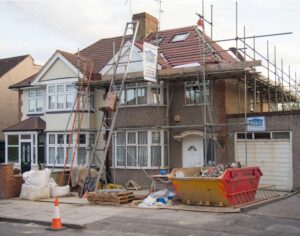
Marketing photos are curated; active sites tell the truth. Ask to walk one job in framing and one near finish. Look for clean paths, guarded openings, labeled panels, protected materials, and safe access—these are signs of control. Check that windows match rough openings, flashing is correct at sills, and penetrations are sealed. In a bath under tile, ask to see waterproofing and whether shower pans were flood-tested. Small details here predict whether your house will be quiet and dry or noisy and leaky.
Observe the trade relationships. Do subs seem organized and respectful, or harried and improvising? Ask how inspections have gone on the job you’re touring and whether there were any re-inspections. Passing first time isn’t luck; it’s preparation. If the superintendent can explain what’s next this week and next, you’re seeing a team with a real plan.
Schedule Discipline: Critical Path, Buffers, and Lead Times
A strong builder lives on critical path thinking. Ask for a baseline schedule with major milestones—foundation complete, dry-in, rough-ins passed, insulation inspection, drywall, cabinets, tops, finals—and how often it’s updated. Then probe the “what ifs”: “If windows slip two weeks, what changes?” “How do you protect finishes if HVAC startup is late?” You’re listening for realistic buffers, sequencing tricks (pulling exterior ahead of interior during dry spells), and the ability to reorder without crowding trades into rework.
Get specific about long-lead items. Good builders order windows before ground breaks, release cabinets as soon as rough measurements are reliable, and pre-book critical subcontractors weeks ahead. Ask for a procurement schedule by item and order date. In volatile markets, a builder who can articulate both price-escalation triggers and de-escalation fairness is advertising maturity.
Quality Control: Building Science and Checkpoints
High quality isn’t magic; it’s checkpoints. Ask builders to describe their QA process: pre-MEP framing walks to confirm blocking and penetrations, air-sealing checklists before insulation, in-wall photo documentation, tile pan flood tests, and paint punch before fixtures land. If your climate or goals point to higher performance, ask about blower-door targets, WRB strategy, continuous exterior insulation, and mechanical ventilation. Builders fluent in these topics protect comfort and durability while avoiding mold, drafts, and callbacks.
Request a sample submittal package—shop drawings for stairs or cabinets, product cut sheets for windows and WRB, and an approvals log. A team that controls paperwork controls outcomes; it ensures the thing installed is the thing you specified.
Budget Control: Allowances, Changes, and Transparency
Budgets fail in the fog between “we’ll pick later” and “the crew is on site.” Ask for an allowance tracker template and how often it’s updated. Require that big-ticket allowances (cabinets, windows, appliances) list whether numbers include delivery, tax, and installation. Clarify markup/fee once and in writing. For changes, insist on a written change-order before work proceeds that states scope, cost, and time impact; emergencies that protect safety or weather exposure can proceed same-day with a follow-up CO.
If you’re open to cost-plus or GMP, ask for weekly cost reports by cost code and a threshold above which purchase orders require owner approval. Transparency is a habit; you want a builder who brings numbers into the light automatically rather than only when asked.
Subcontractors and Supervision: Who Really Builds Your House
Most of the craftsmanship in your home will be performed by subcontractors, so ask how the builder selects, vets, and retains them. Look for long relationships with core trades—framers, electricians, plumbers, HVAC, tile—because continuity produces consistency. Ask what the plan is if a key sub falls behind and how often the builder brings in backup crews to protect the schedule without sacrificing quality.
Clarify superintendent coverage. A single super running five jobs can’t babysit your details. The best builders right-size oversight, visit daily during critical phases, and keep a daily log with photos. Ask to see one; consistent logs signal a culture of accountability.
Communication and Client Experience: The Rhythm That Prevents Surprises
Houses stall on silence. Set expectations for a weekly rhythm: a 30–45 minute standing site meeting, written recaps with photos, a three-week look-ahead, and a punchy list of owner decisions needed with due dates. Ask what tools the builder uses—a simple shared folder or portal with schedules, selections, and change-order logs is enough. You want access, not a black box.
Measure how the builder handles bad news. Prompt, clear escalation on issues—”the tile you picked is backordered; here are two equal alternates with price/time impacts”—beats soft-pedaling that burns weeks. A builder who surfaces risks early and proposes options is the partner you want when weather, supply chains, or humans misbehave.
Warranties, Service, and Aftercare: Life After the Ribbon-Cutting
Contracts end; houses live on. Ask for the builder’s standard warranty terms—many offer 1-year workmanship, 2-year systems, and 10-year structural coverage, with manufacturer warranties on top. Then ask about service process: a 30-day and 11-month tune-up visit, response time for urgent issues, and how warranty tickets are tracked. A builder who staffs warranty work and honors callbacks invests in reputation; one who disappears when the punch list is done leaves you to fend for yourself.
Insist on a closeout package: paint colors and sheens, appliance models, filter sizes, owner manuals, serial numbers, and a map of shutoffs. This is your home’s operating manual; you’ll use it more than you think.
Red Flags and Green Signals: Read the Tells Early
Some tells show up in the first meeting. Red flags include front-loaded payment schedules that outpace value installed, reluctance to provide insurance certificates or lien waiver samples, thin or vague allowances, and a habit of saying “we’ll figure that out later” about selections that clearly affect framing or rough-ins. Overpromising start dates in a tight labor market is another warning—credible builders protect your expectations rather than chase your signature.
Green signals look like systems: a builder who brings a sample Gantt chart, a procurement plan with order dates, a clean allowance tracker, and a change-order template without being asked. Crisp answers about inspections, a superintendent with recent, relevant jobs, and subs who speak well of the company are the quiet indicators you’re looking for.
Simple Scorecard: Compare Shortlisted Builders Side by Side
You don’t need a PhD rubric; you need a clear way to weigh trade-offs. Use a 100-point score with weights that reflect your priorities and fill it in after interviews and site visits. The numbers won’t make the decision for you, but they’ll make your reasoning visible. Criteria Weight Builder A Builder B Builder C Relevant project experience & superintendent fit 20 Schedule realism & critical-path plan 15 Quality control & building-science fluency 15 Budget transparency (allowances, CO process) 15 Subcontractor bench & staffing capacity 10 Communication rhythm & tools 10 References, safety, insurance, lien process 10 Contract terms fairness (markup, escalation) 5 Warranty & aftercare 10 Total (out of 100)100
Fill the cells with brief notes (“windows ordered before foundation,” “weekly look-ahead shown,” “cabinet lead time plan unclear”) and scores. If a builder trails badly on schedule realism or superintendent fit, price alone shouldn’t save them.
Decision and Contracting: Lock the Win Without Losing the Schedule
Once you choose, move quickly to pre-construction so lead times don’t slip. Convert major allowances into product selections with models and finishes. Attach to the contract: the plan set, spec book, selections schedule, baseline schedule, payment/draw schedule, change-order form, and insurance certificates. Confirm the superintendent name and contact info in writing and agree on the weekly meeting time now, not later.
Choose the contract type you prefer—fixed-price, cost-plus, or GMP—and add practical guardrails: unit prices for rock/concrete, bid alternates you might exercise, simple price-escalation triggers (and de-escalation, if applicable), and a clear lien-waiver workflow per draw. If the budget is large, a short review by a construction-savvy attorney is cheap insurance. The details you button up here are the delays you’ll never see on site.
Frequently Asked Questions, Answered Briefly but Usefully
Homeowners often ask whether cheapest bid wins. It rarely should. A slightly higher bid from a builder who orders windows early, passes inspections cleanly, and shows you a real schedule will save months of carrying costs and piles of rework. Another common question: can you manage subs yourself to save money? You certainly can, but you’re taking on schedule risk, payment risk, safety, and Code Compliance without the trade relationships that keep jobs moving. If you have time, expertise, and appetite for risk, the owner-builder path exists; most people are happier with an accountable GC.
Finally: how do you tell if a builder will be responsive after you sign? Watch how they sell. Builders who answer directly, put details in writing, and volunteer process artifacts will behave the same during construction. Builders who dodge specifics and rely on charisma don’t suddenly become disciplined when the rain starts. Choose the team that already looks like the project you want to run.
The Bottom Line
Choosing the right builder is a decision about leadership and systems as much as craftsmanship. Define your project, source candidates from people who see builders under pressure, pre-qualify with paperwork, and interview for process with eyes on schedule, quality, and money. Visit live job sites, weigh red flags against green signals, and use a simple scorecard to keep your judgment clear. Then lock the win with a contract and attachments that turn expectations into habits—procurement dates, allowance specifics, change-order rules, and a weekly rhythm.
Do this work up front and the months ahead will feel organized rather than improvised. Your builder will know what to order and when, trades will arrive to a site that’s ready for them, inspectors will pass what they see, and you’ll watch a plan become a house without the drama that gives construction a bad name. That’s the result of choosing well—and it’s worth every hour you invest before a shovel hits the ground.