Construction Loan Draw Schedules Explained: How the Money Is Released
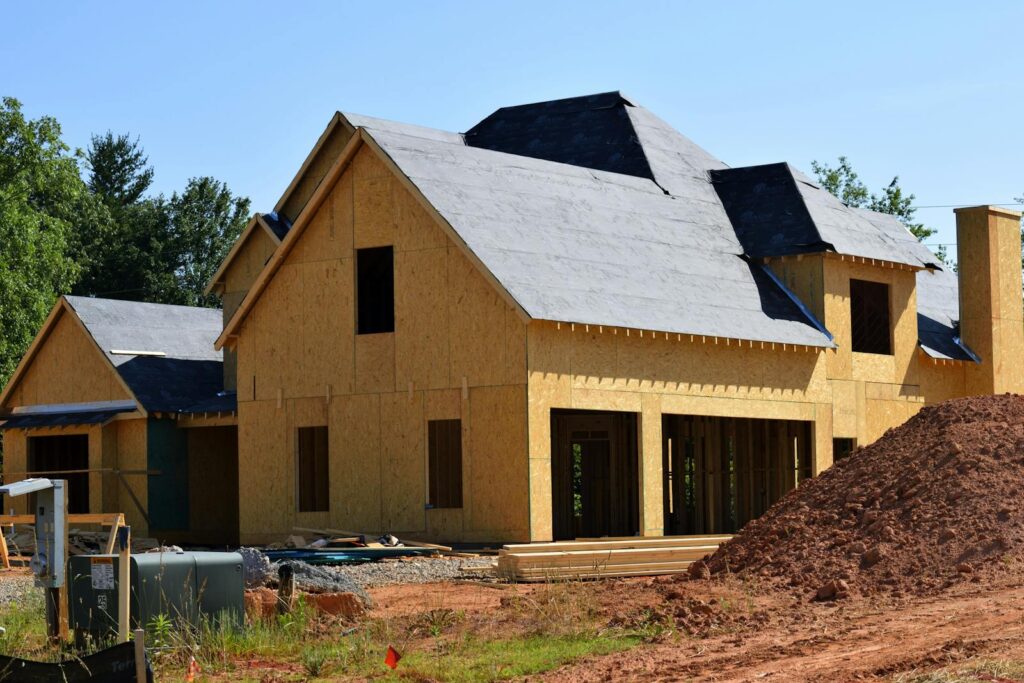
If you’re building a home for the first time, few parts of financing feel as mysterious as the draw schedule—the month-to-month rhythm where the lender releases money as your house rises from dirt to drywall to final walk-through. Get this rhythm right and your project hums: crews stay mobilized, deposits are paid on time, inspections pass on the first try, and you never endure the dreaded “everyone’s waiting but funds aren’t here” week. Get it wrong and you pay for idle days, rack up interest without progress, and juggle change-order drama you could have avoided. This guide demystifies the Construction Loan Draw process from planning to paperwork to funding, so you know exactly how the money is released, who triggers each step, and how to keep cash flowing at the same pace as your build.
At a high level, a draw schedule ties dollars to verifiable milestones. You and your builder propose a sequence—foundation, framing, rough-ins, drywall, finishes, and final—then your lender (and often your title company) confirm work is complete at each stage before releasing funds. You pay interest-only during construction on the amount drawn, not the total approved loan, which keeps early-phase payments lower and aligns costs with real progress. Master this sequence and you’ll turn what looks like red tape into a reliable conveyor belt that moves your project forward—predictably, cleanly, and on budget.
What a Draw Schedule Is (And Why It Exists)
A draw schedule is a milestone-based plan that maps your construction budget to staged disbursements. Instead of wiring the full loan up front, the lender advances specific amounts as work is completed and documented. This structure protects you from paying too far ahead, protects the bank from funding unverified work, and protects the builder by ensuring money arrives when specific scopes are finished and ready for the next phase.
The schedule is built on a schedule of values—a line-item budget that breaks the project into logical buckets like excavation, foundation, framing, roofing, windows, plumbing, electrical, HVAC, drywall, cabinets, flooring, and site restoration. Each draw request references the schedule of values to show what percent of each bucket is complete. Because money follows progress, you’ll often hear lenders talk in terms of percent complete rather than just invoices. That’s by design: it anchors cash flow to the structure itself, not just paperwork.
For you, the owner, this is more than compliance. A clear draw schedule creates financial guardrails. It reduces the chance that a big upfront payment disappears into a long lead time or that a small delay turns into a cash crisis. The draw process is a project-management tool in disguise: it forces everyone to agree on milestones, documentation, and timing before a shovel hits dirt.
Who’s Involved (And What Each Party Actually Does)
Four players touch every draw. You approve requests and keep the overall budget and documents organized. The builder/GC performs work, compiles invoices, updates percent complete, and provides Lien Waivers. The lender verifies progress (directly or via a third-party inspector) and releases funds according to policy. The title company ensures clean lien waivers and issues any required construction endorsements so the lender’s security interest stays protected as money flows.
Each party has a job you can anticipate. The builder’s job is to produce a complete draw package—updated schedule of values, photos, invoices, and signed conditional lien waivers from subs and suppliers. The lender’s job is to order and review an inspection, reconcile the package with the loan budget, and fund the approved amount. The title company’s job is to track waivers and update title as draws pay off subs, preventing mechanic’s liens from surprising you later. Your job is to be the conductor: sign what’s needed, confirm reality matches paperwork, and keep all documents stored together so no one wastes time searching for a missing receipt.
How a Typical Draw Timeline Is Structured
Most single-family builds use five to eight draws, sized to the cadence of work and the need for material deposits. A common six-draw pattern looks like this: mobilization + foundation, framing + roof dry-in, rough-ins (MEP), insulation + drywall, interior/exterior finishes, and final/punch + closeout. Each draw combines scopes that naturally complete around the same time and represent a meaningful slice of budget.
You’ll notice two principles in good schedules. First, draws are big enough to fund mobilization and the next phase without starving crews, but small enough to avoid paying far ahead. Second, they use objective checkpoints (inspections, photos, pass/fail items) that reduce debate. Your builder and lender both prefer milestones everyone can see and verify quickly. That’s why “roof dry-in” or “rough-in complete with inspections passed” is favored over squishier labels like “halfway done with interior.”
Fixed-Price vs. Cost-Plus: How Contract Type Shapes Draws
Your contract structure influences the draw rhythm. In a fixed-price contract, the builder agrees to deliver the project for a lump sum with a detailed schedule of values. Allowances cover selections you’ll make later (cabinets, tile, appliances). Draws are sized to the schedule of values and typically align milestone funding to tranche percentages. In a cost-plus contract, the builder bills actual costs plus a fee, and draws reimburse verified expenditures with fee calculated on top. Both can work well; what matters is transparency and documentation.
Fixed-price draws are predictable and easy to audit against percent complete; the lender loves that. Cost-plus draws need crisp documentation—paid invoices, timecards, purchase orders, delivery tickets—and a current job cost report. If you’re going cost-plus, expect the lender to scrutinize contingency and fee handling and to cap or define how those are billed per draw. Either way, tie dollars tightly to finished scope so cash and progress stay married.
Inspections: The Gate That Turns Paperwork into Cash
Every draw hinges on an inspection. The inspector verifies that claimed work is complete and consistent with plans and building code. They might confirm that the slab and stem walls meet spec, that framing and roof sheathing are installed, that plumbing and electrical rough-ins passed municipal inspections, or that drywall is hung and taped. They’re not there to judge your paint color; they’re there to validate scope and protect against over-advancing funds.
Understanding the inspection rhythm saves you real time. Ask your lender for their SLA—how many business days from draw request to inspection, and from inspection approval to funding. Plan your calendar to beat weekends and holidays. If inspections happen Mondays and funds release Wednesdays, don’t submit a package at 4 p.m. Friday and expect money Monday. Small timing choices are the difference between continuous work and expensive idle weeks.
Lien Waivers and Title: The Quiet but Critical Paper Trail
Draws require lien waivers—legal receipts from subs and suppliers that say, in effect, “we’ve been paid through this amount and won’t lien the property for these services.” You’ll commonly use conditional waivers with the draw request (“I’ll waive when funds clear”) and unconditional waivers after money hits. Your title company tracks these and issues or updates construction endorsements so the lender’s collateral stays lien-free as work advances.
This isn’t just formalism. Clean waivers are your shield. They prevent a sub who got paid by the GC from later filing a lien because their upstream supplier wasn’t paid. Build a habit of collecting waivers at the same time as invoices, and insist on a complete set for each draw. It’s a rhythm, not a scramble, if you set it up from the first request.
Retainage (Holdback): Why Lenders Sometimes Pay 90–95% of a Draw
Many lenders and owners apply retainage—withholding a small percentage (often 5–10%) from each draw until final completion. Retainage keeps everyone incentivized to finish punch items and deliver clean closeout documents. It’s not a penalty; it’s a performance bond built into cash flow. At the end, when you obtain the Certificate Of Occupancy (CO) and the punch list is satisfied, the lender releases retainage as part of the final draw.
Retainage interacts with your builder’s internal cash flow. A strong GC anticipates this, prices mobilization correctly, and schedules long-lead purchases without banking on retainage. If retainage is new to your builder, align expectations early. You don’t want a dispute in month seven because someone assumed 100% funding at each step when the loan docs say otherwise.
Long-Lead Materials, Deposits, and Off-Site Storage
Custom windows, specialty doors, cabinets, engineered trusses, and HVAC equipment often require deposits long before installation. Lenders vary in how they handle off-site stored materials. Some will fund with a purchase order and proof of deposit plus proof of insurance and storage; others require materials to be on site and identifiable to the project. Clarify this early so you can sequence orders without starving cash.
If your lender funds deposits, expect extra documentation: vendor quotes, signed orders, payment receipts, warehouse insurance, and photos of labeled materials if stored. If your lender does not fund deposits, plan a temporary outlay from your cash reserve with reimbursement in the next draw when materials arrive on site. Either way, the rule of thumb is simple: the more verifiable the material’s existence and project tie-back, the faster the funding.
Change Orders, Contingency, and Mid-Stream Budget Moves
Even the best plans need adjustments. A change order documents scope additions or substitutions, their cost, and schedule impact. Lenders distinguish between must-do changes (code or engineering fixes) and nice-to-have upgrades (designer tile instead of standard). The former are often eligible for contingency funding inside the loan; the latter usually require cash unless your loan-to-value (LTV) has room and the lender approves a budget reallocation.
Keep your contingency sacred for true surprises: poor soil, utility reroutes, structural tweaks. Treat aesthetic upgrades as cash decisions you make knowingly. If you want the lender to fund a change from contingency, present a crisp package: the change-order form, revised schedule of values, updated drawings if structural, and a note explaining why it’s required. Clean paperwork speeds approvals and keeps work moving.
A Concrete Example: Numbers That Show How Draws Flow
Assume a $600,000 project cost with an approved construction-to-permanent (C2P) loan sized at 80% LTV (so the construction portion will ultimately fund $480,000; the rest is your equity/land). Your builder proposes six draws:
- Mobilization, sitework, and foundation — $90,000
- Framing and roof dry-in — $120,000
- Rough-ins (plumbing, electrical, HVAC) — $105,000
- Insulation, drywall, exterior cladding — $90,000
- Interior finishes (cabinets, tile, paint, trim, flooring) — $120,000
- Final, punch, landscaping, clean, CO — $75,000
Suppose the lender applies 5% retainage to each draw and funds after each inspection within three business days. Here’s how the disbursed loan balance might grow and how your interest-only payment ramps (assume a 6.75% construction rate; monthly factor 0.0675 ÷ 12 = 0.005625):
- After Draw 1 (funded 95% of $90k = $85,500): Balance $85,500 → Interest ≈ 85,500 × 0.005625 = $480.94
- After Draw 2 (adds 95% of $120k = $114,000): Balance $199,500 → Interest ≈ 199,500 × 0.005625 = $1,122.19
- After Draw 3 (adds 95% of $105k = $99,750): Balance $299,250 → Interest ≈ 299,250 × 0.005625 = $1,683.92
- After Draw 4 (adds 95% of $90k = $85,500): Balance $384,750 → Interest ≈ 384,750 × 0.005625 = $2,163.73
- After Draw 5 (adds 95% of $120k = $114,000): Balance $498,750 → Interest ≈ 498,750 × 0.005625 = $2,806.64
- After Draw 6 (adds 95% of $75k = $71,250): Balance $570,000 → Interest ≈ 570,000 × 0.005625 = $3,206.25
At final closeout, the lender also releases retainage (the 5% held back each draw), subject to clear waivers, passed inspections, and CO. That true-up brings the total funded construction amount in line with approved budget. Your interest cost during construction mirrors progress, not promises—exactly how a healthy draw schedule should behave.
Documentation: What a “Complete Draw Package” Looks Like
A complete draw package makes funding fast and boring (that’s the goal). Expect to submit: a signed draw request form; the updated schedule of values with percent complete; photos of completed work; relevant municipal inspection cards for passed roughs or finals; invoices or paid receipts for materials; conditional lien waivers from the GC and all subs/suppliers paid in the prior draw; and proof of builder’s risk insurance if the policy was renewed mid-project. If you’re requesting funding for stored materials, include purchase orders, delivery tickets, and storage insurance/labels.
Treat this like a repeating checklist. Build a folder structure—Draw 1 through Draw N—with subfolders for invoices, waivers, photos, and inspections. Every minute you save your lender’s reviewer is a day you win on site. The magic of smooth draws isn’t any single form—it’s consistency.
Timing Pitfalls (And How to Avoid Paying for Idle Weeks)
The two costliest habits are submitting incomplete packages and mis-timing inspections around weekends and holidays. Incomplete packages lead to back-and-forth emails, second visits, and missed funding windows. Mis-timed inspections create Fridays where materials can’t ship because money lands Monday, which means crews sit, which means you pay interest for zero progress.
Solve both with two moves. First, rehearse the draw package with your lender before Draw 1 so your template matches their expectations. Second, anchor your jobsite calendar to the lender’s SLA. If inspections are Mondays and funding is Wednesdays, schedule crews and deliveries for Thursday onward. If a long weekend looms, request inspection one business day earlier. Treat the lender’s cadence as a constraint in your look-ahead schedule just like weather or lead times.
Owner-Builder vs. Licensed GC: Extra Scrutiny on Draws
If you’re an owner-builder, expect tighter draw oversight. Lenders will ask for more photos, more receipts, more proof that labor and materials tie directly to the site and not another project. They may limit advances for stored materials and require a more granular schedule of values. That’s not distrust; it’s risk management. An experienced GC with clean paperwork often unlocks smoother funding and fewer questions, which can save weeks over a long build.
If you do go owner-builder, borrow a GC’s discipline: keep immaculate records, pre-collect waivers, maintain job logs with dates and photos, and submit complete packages on a reliable cadence. The more you make the reviewer’s job easy, the faster money arrives.
How Draws End (Punch Lists, Final Inspections, CO, and True-Up)
The last draw ties up everything: punch repairs, appliance installs, exterior grading, mailbox and house numbers, and final cleaning. Your municipality issues a Certificate of Occupancy, the lender verifies that all open permits are closed, and the title company confirms unconditional lien waivers from everyone who touched the job. At this point, retainage is released, small balances are trued up, and your C2P loan converts to the permanent mortgage.
A clean finish starts weeks earlier. Begin collecting final unconditional waivers as soon as subs finish their last visit. Schedule your municipal final inspection with room for re-inspection if needed, and don’t schedule movers until the CO is in hand. Draws have momentum—keep it through the tape.
Soft Costs, Allowances, and Things People Forget to Budget in Draws
Soft costs—permits, plan review, structural engineering, surveys, utility taps, and temporary power—need money early. If these aren’t baked into Draw 1, you may find yourself using cash while the loan sits idle waiting for a larger milestone. Likewise, allowances for selections (cabinets, lighting, flooring) must be realistic in today’s prices; under-allowancing forces mid-project re-approvals that slow funding.
Walk your schedule of values with a highlighter and ask, “When is the first dollar actually due for each line?” Adjust draws accordingly. It’s better to include a mobilization sub-line that covers fees and taps than to let month one bleed your reserve while you wait for a foundation inspection.
FAQ: Fast Answers to Common Draw Questions
Can I ask for a partial draw if a milestone is mostly done?
Often yes, if percent complete is clear and inspection agrees. Lenders prefer discrete milestones, but most allow proportional funding when scopes straddle months.
Will the lender fund deposits before materials are on site?
Sometimes. Expect extra documentation and, in many cases, proof of insured storage or on-site delivery before reimbursement. Ask your lender’s rule up front.
What if the inspector’s percent complete differs from the builder’s?
Documentation and photos resolve most gaps. If needed, the lender may adjust the funded amount to the lower verified percent and roll the remainder into the next draw.
Do draws include the builder’s fee and overhead?
Yes, in the schedule of values. Fixed-price jobs bake fee into line items; cost-plus jobs show fee explicitly and apply it per contract to costs invoiced to date.
How fast do funds arrive after inspection?
Every lender has an SLA—commonly 1–3 business days. Know it, schedule around it, and build delivery/crew plans that assume money on that day, not sooner.
A Simple Owner’s Checklist to Keep Draws Smooth
Create a reusable draw cover sheet listing items to include: updated schedule of values, photos, municipal inspection cards, invoices/receipts, lien waivers, insurance cert if renewed. Build a shared folder structure (Draw 1 … Draw N) with subfolders so your GC and lender always know where files live. Note your lender’s inspection days and funding days in your calendar and plan deliveries accordingly. Pre-collect conditional waivers with every invoice and swap them for unconditional waivers once funds clear. Track retainage totals so your end-of-project cash expectations match reality. Keep a small cash buffer for deposits or timing gaps so the project never waits on a banking calendar.
This isn’t busywork; it’s how you turn a complex process into a routine. The more predictable you make draws, the more your builder can focus on building—and the less you’ll pay for days where nothing happens.
The Bottom Line
A construction loan’s draw schedule is not a hoop to jump through; it’s the operating system of your project’s cash flow. It ties dollars to finished, verifiable work, keeps your interest cost aligned with progress, and protects everyone from the worst failure mode in building: paying too much, too soon, for work that isn’t there. When you set it up with clear milestones, complete documentation, and a calendar that respects inspection and funding timelines, the draw process becomes a quiet conveyor belt that moves your home from concept to keys.
Treat the lender and title team like project partners, not obstacles. Give them neat packets, reliable rhythm, and honest numbers. Protect contingency for real surprises, fund deposits intelligently, and schedule to the lender’s SLA the way you schedule to weather and inspections. Do that and money will arrive when the work is ready—and your build will finish on time, with fewer detours, and with your budget and sanity intact.