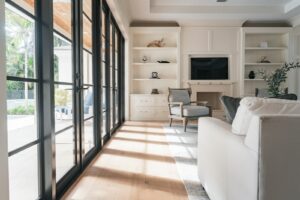
Open Concept vs. Traditional Floor Plans: Which Is Right for You?
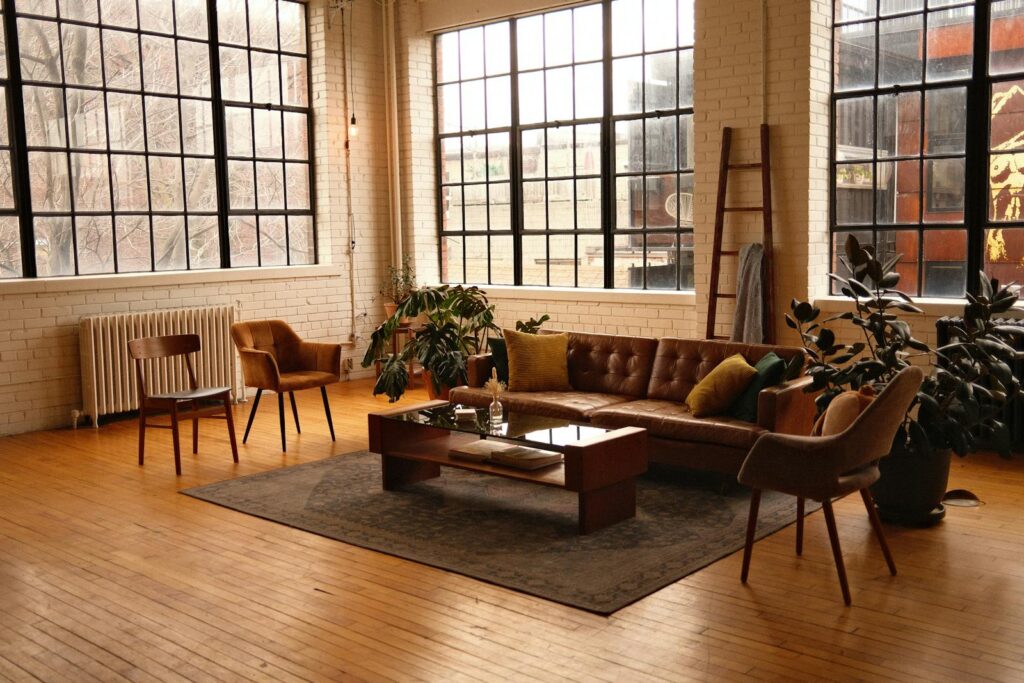
Choosing between an open concept and a traditional (closed) floor plan shapes how your family cooks, works, relaxes, and hosts for years. It decides where sound travels, how smells move, how light fills rooms, what your HVAC has to overcome, and whether daily clutter is out of sight or on instant display. The “right” answer isn’t a trend; it’s a match between your routines, your site’s light and views, your tolerance for mess and noise, and your long-term plans for resale and aging in place. This guide compares the two approaches in plain terms—flow, acoustics, privacy, storage, cost, energy, and maintenance—then shows how to build a hybrid (“broken-plan”) that borrows the best of both.
What These Plans Actually Mean (Beyond the Buzzwords)
An open concept plan removes most interior walls between kitchen, dining, and living, often creating a single great room with shared light, sight lines, and circulation. Doorways give way to cased openings, islands, and furniture groupings. It feels bigger per square foot, and it’s ideal for supervision and casual entertaining.
A traditional (or closed) plan keeps clear room definitions with doors and walls, channeling traffic through halls. Each room can be quiet, purpose-built, and easier to heat or cool. Storage is simpler because you have more perimeter wall to place cabinetry and built-ins. Traditional isn’t old-fashioned; it can be crisp and contemporary—it just treats rooms like tools instead of one giant space for everything.
The Case for Open Concept (Where It Truly Shines)
Open plans excel at light and togetherness. With fewer interior walls, daylight penetrates deep from multiple directions, so rooms feel airy and optimistic. If you’re cooking while kids do homework, or you like to talk to guests while finishing a sauce, that kitchen-dining-living continuity is unbeatable. It’s also efficient for small footprints: when walls disappear, the same square footage “lives” larger because circulation is embedded in the space rather than carved into hallways.
Open layouts are also flexible. Furniture resets can turn one wide zone into a media nook plus a conversation area without moving a single partition. Entertaining flows better because guests naturally circulate around an island and into seating without traffic jams at doorways. For households that value visual supervision, open concept is the simplest way to keep an eye on toddlers, teenagers, and pets from one command center.
The Hidden Tradeoffs of Open Plans (Know Them Before You Commit)
Open spaces are honest—sometimes too honest. Noise and odors travel wherever air does. A blender, range hood, or subwoofer becomes the soundtrack for the entire level. Without walls, there are fewer places for acoustic absorption or for a real door that creates a true quiet room during calls. The same transparency applies to clutter; dishes in the sink and art projects on the table “belong” to every room visually until they’re handled.
Climate control can be trickier. Large volumes with high ceilings produce stratification (warm air pooling high, cool air near the floor). It’s harder to zonalize heating and cooling without doors. You’ll rely more on shading, ceiling fans, smart diffusers, and meticulous duct design to avoid hot and cold spots. Storage can also suffer: removing walls removes wall real estate for tall pantry cabinets, bookcases, and art. Many open homes end up adding casework as low partitions just to recover the storage the walls once provided.
The Case for Traditional Plans (Why “Closed” Can Feel Calmer)
Traditional plans are masters of privacy, acoustic control, and purpose. Doors matter. A closed office is a real office; a separate den is a retreat; a defined dining room can be a music room tomorrow. Because rooms are smaller volumes, they’re easier to heat and cool and maintain stable humidity—critical for comfort, wood floors, instruments, and artwork. Traditional layouts also create natural storage perimeters, so mudrooms, pantries, and built-ins fit logically and keep visual clutter out of the main living space.
Another quiet advantage: odors and moisture are easier to contain. A strong, exterior-vented range hood and a kitchen door that closes keep fried foods and steam from becoming whole-house events. If your day includes early risers or late-night workers, traditional plans reduce household collisions—noisy tasks can happen without waking the rest of the house.
The Tradeoffs of Traditional (Don’t Ignore These)
Closed plans can feel compartmentalized and dark if daylight is limited or window placement isn’t strategic. Hallways consume square footage that doesn’t “live.” Entertaining can feel formal by accident, with guests stalled by thresholds and door swings. Supervision is harder; conversations may die at walls. Older traditional homes sometimes place small rooms in a chain, which can create frustrating circulation—a kitchen that pinches, a dining room that is beautiful but seldom used, or a living room you pass through rather than settle into.
Fortunately, many of these drawbacks are solvable: you can widen doorways, align sight lines, and use interior windows or glass doors to move light while preserving separation. But it does require design intention; traditional without that intention can read cramped.
The Hybrid Sweet Spot: “Broken-Plan” Done Right
The best of both worlds often looks like a broken-plan: zones are visually connected but gently separated by half walls, bookcase partitions, sliding pocket doors, double-wide cased openings, glass doors, ceiling drops, or a shift in floor finish. You still share light and easy flow, but you gain sound control, wall space, and the ability to stage different activities without friction.
Use pocket or barn doors to convert an open office into a closed one for calls. Place a scullery or back kitchen behind the main kitchen to hide mess and noisy appliances during dinner. Add a two-sided fireplace or a storage wall that stops the eye and reduces echo. Incorporate interior windows to move daylight through a stairwell without giving up a wall for art or built-ins. Done thoughtfully, broken-plan reads airy, not chopped.
Lifestyle Profiles: Match the Plan to the People
Young families and supervision. If watching kids while you cook is essential, an open or broken-plan with clear sight lines from the island to play zones is gold. Add a pocket door to a playroom so it can become a quiet homework room later.
Frequent entertainers. Open plans support buffet flows and casual mingling. Build storage at the perimeter (banquettes, built-ins) so serving ware and linens don’t live on counters. Consider a butler’s pantry or scullery to keep noise and mess offstage.
Serious cooks and fragrance-heavy cuisines. Traditional or broken-plan wins. A door between kitchen and living plus a strong exterior-vented range hood (and make-up air where required) keeps aromas contained. Add tile upstands and washable surfaces near the cook line.
Remote workers and students. Doors help. If staying open, put the office at a quiet corner with a solid-core door and plan acoustic separation (rugs, bookcases, absorption panels) between it and the great room.
Neurodiversity and sensory comfort. Predictable acoustic environments often favor traditional or broken-plan layouts. Being able to step into a low-stimulus room—soft light, lower echo—can be a daily wellbeing tool.
Pets and mud. Any plan can work if the back-of-house is right. A defined mudroom with durable floors, a pet wash, and closed storage prevents open great rooms from becoming gear depots.
Aging in place and multigenerational living. Traditional plans simplify privacy, quiet, and zonal HVAC. A main-level suite with proximity to a full bath, a den with a door, and a kitchen that can close during overnight care are practical blessings.
Budget, Structure, and Buildability (What Each Choice Costs You)
Open concepts often demand longer structural spans. Removing load-bearing walls requires LVL or steel beams; to keep ceilings flush (no drop beam), you may need to recess structure into the floor system or install posts hidden in walls. That adds engineering and framing cost. Relocating plumbing stacks and mechanical chases can snowball in renovations. If you love the open look but your budget is tight, consider wider cased openings instead of fully removing walls; you’ll get 80% of the effect at a fraction of the structural complexity.
Traditional plans are cheaper to engineer but can cost more in finish carpentry and doors if you use many high-quality openings. They can also take more time for drywall, trim, and painting because more corners and stops mean more labor. In both models, clever design mitigates cost: align wet walls, keep ducts inside the conditioned envelope, and simplify roof geometry so ceiling plans stay clean.
Light and Daylighting (Beautiful in Both, Differently Achieved)
Open concept makes it easy to borrow light across the plan, but it also makes glare control and solar gain critical. Size and orient glazing by façade (east/west needs more shade control; north/south can be generous with proper overhangs). Use layers of light at night—ambient, task, and accent—on separate dimmers so one giant room doesn’t feel like a gymnasium after dark.
Traditional plans require more strategic daylighting. Stack windows to promote cross-ventilation, add transoms or interior windows to pull light into halls, and consider a glass pocket door for borrowed daylight in a den that you still want to close. You’ll likely need more fixtures, but you gain the ability to create distinct scenes: bright kitchen, moody library, restful bedroom—each tuned for the activity it hosts.
Acoustics and Sound Control (Your Future Self Will Thank You)
Open rooms need softness: area rugs, upholstered seating, curtains, acoustic panels, and even bookcases that scatter sound. High ceilings raise reverberation; a simple soffit or wood slat feature over a dining table can add absorption and look stellar. Place noisy appliances (dishwasher, wine fridge, ice maker) away from the seating zone or in a scullery.
Traditional rooms mainly need door quality and smart return air paths so you can close a door without starving HVAC. Use solid-core doors, weatherstripping, and thoughtful wall assemblies (insulated interior partitions where noise matters). If you’re building new, ask for quiet duct design—larger, slower ducts and proper returns reduce the hiss and rumble that undermines calm.
Ventilation, Odors, and Moisture (Design the Air, Not Just the Walls)
In open homes, a high-quality, exterior-vented range hood that actually captures the cooktop plume is mandatory; match CFM to cooktop output and consider required make-up air. Balance whole-house air with an ERV/HRV so you get fresh air without energy waste. If you love open but hate lingering cooking smells, a back kitchen for prep and dish noise is the secret weapon.
In traditional homes, strategic door placement and exhaust fans let you isolate moisture from baths and laundry. Keep ducted returns or transfer grilles so closing doors doesn’t stall ventilation. This is where traditional shines: you can keep the living room smelling like cedar, not salmon, on fish-taco night.
Energy and Comfort (Heating, Cooling, and Bills)
Open concept can be harder to condition evenly, especially with double-height spaces. Mitigate with ceiling fans, shading, right-sized heat pumps, and supply/return placement that encourages mixing. If you crave openness, keep a realistic ceiling height in the great room (you rarely need 20 feet) and consider zoned HVAC to target high-load areas.
Traditional plans slice the home into thermal zones by default. Close a door and the space holds temperature longer. Smaller rooms mean shorter duct runs, more predictable throw from registers, and faster response on thermostats. If operating cost and quiet are top priorities, traditional or broken-plan often has the edge.
Space Planning and Storage (Where the Stuff Actually Goes)
Open layouts require intentional anchors. A sofa needs a wall substitute (low storage, a fireplace mass, a screen) or it floats awkwardly. Plan traffic clearances around islands (42–48 inches in busy kitchens) and avoid pathways that cut through the cook zone. Build storage at the perimeter—a true pantry, a wall of built-ins, a dining banquette with drawers—so the great room doesn’t become a staging area for everything.
Traditional layouts should guard against micro-rooms. Size rooms to fit real furniture with comfortable clearances, and trim hallway length by aligning doors and stacking functions. Use room definitions to your advantage: a laundry that truly fits hampers and a counter; a mudroom that swallows backpacks; a small library/office near entry for mail and devices so they don’t colonize the kitchen.
Safety, Code, and Practicalities You Don’t See on Pinterest
Open stairs need proper guards, lighting, and child-gating strategies. Large spaces require enough smoke/CO detectors and a path to exits that isn’t blocked by the island’s radius of influence. If you place a cooktop in an island, protect the seating side from splatter and heat, and think carefully about hood capture—downdraft systems rarely equal a well-designed canopy.
Traditional rooms make egress and compartmentation simpler, which can buy peace of mind in emergencies. But small rooms with doors must still meet clearances and swing safety (especially around stairs and baths). Neither model is “safer” by default; it’s about detailing with foresight.
Resale and Appraisal (What the Market Actually Buys)
Markets vary. In many areas, buyers still expect an open kitchen-living-dining relationship; in others, they prize a separate den/office after the work-from-home shift. The safest long-term bet is convertibility: design an opening wide enough for pocket doors in the future, or wire and frame an office that can open to the great room later. Avoid extremes—an all-glass, all-open main level with no storage is as risky as a rabbit warren of tiny rooms. Versatility appraises well because more buyers can see themselves living there.
A Decision Framework You Can Use This Week
1) Map your day. Write “we always…” and “we never…” (we always host family at holidays; we never use a formal dining room). Translate to adjacencies: kitchen ↔ pantry ↔ garage; office ↔ bath; mudroom ↔ laundry.
2) Rank your top three values. Light, quiet, supervision, cooking performance, display/storage, energy cost—your plan should optimize the top three, not all twelve.
3) Diagnose your site. Where does sun come from? Where are the views and the neighbors? Let orientation decide how open your bright sides can be and how protected the hot sides should be.
4) Tape it out. On floors or the driveway, tape a 15×20 living zone, a 12×18 dining, and a 14×18 kitchen with 42–48 in aisles. Walk the routes. Does it feel cohesive or chaotic?
5) Sound test. In your current home, run a blender, range hood, and TV at once. How much separation do you want in the new house? That answer is your openness dial.
6) Smell test. Cook what you love most. If you want those aromas contained, plan for a door or a scullery.
7) Storage audit. List everything that “lives” in common spaces. Where will it go in each model? If your answer is “the island,” rethink.
8) Mechanical reality check. Ask your designer for a zoned HVAC concept sketch. If the open great room drives equipment size wildly upward, consider broken-plan separators.
9) Cost reality check. Price the structural work to remove walls vs widen openings. If a flush beam blows the budget, adjust the design—not the bank account.
10) Future-proof. Frame pockets for doors you can add later, rough in conduit across big openings for future wiring, and pick a layout that can flex through life stages.
Room-by-Room Guidance (Open, Traditional, or Hybrid)
Kitchen. Open: keep seating out of the cook triangle, give the hood real capture, and anchor the living zone with a mass (fireplace, storage wall) to control echo. Traditional: put cleanup and noise behind a door, but add a pass-through or interior window for borrowed light.
Dining. Open: banquette + pendant defines a “room” without walls. Traditional: cased openings keep formality optional; consider pocket doors for acoustics during dinner parties.
Living. Open: two seating groups prevent the “furniture swimming” effect. Traditional: keep wall lengths that fit a real sofa plus side tables; add floor outlets for lamps.
Office. Open: glass pocket or steel-and-glass doors preserve light with acoustic control. Traditional: solid door, solid-core if calls matter, and returns for air.
Media. Open: either accept sound sharing or create a snug media den off the great room with doors. Traditional: perfect candidate for a closed room; ideal for gaming and movies.
Mudroom/Laundry. Both: give them doors and durable finishes. Closed rooms keep the open areas serene; open shelving hides behind cabinets or curtains.
Common Mistakes (And Easy Fixes)
Mistake: Believing open plans solve everything.
Fix: If you need quiet zones, bake them in—office with a door, small den, or sliding partition.
Mistake: Oversizing glass without shade.
Fix: Tune SHGC, add overhangs, and position windows by façade; beautiful light beats brute-force glass.
Mistake: No storage in an open great room.
Fix: Perimeter built-ins, a real pantry, and a mudroom keep the main level clear and calm.
Mistake: Tiny traditional rooms.
Fix: Enlarge key openings, align sight lines, and consolidate micro-spaces into one useful room.
Mistake: Ignoring acoustics.
Fix: In open rooms, add rugs, curtains, books, and absorptive ceilings; in closed rooms, use solid doors and insulated partitions.
Mistake: Underpowered ventilation.
Fix: Exterior-vented hood sized to the cooktop, ERV/HRV for fresh air, and transfer grilles for closed rooms.
Quick Comparison Checklist
Open Concept Pros: shared light and views; supervision; flexible entertaining; small homes feel larger.
Open Concept Cons: noise and odors travel; harder HVAC zoning; fewer walls for storage/art; clutter is public.
Traditional Pros: privacy and quiet; better thermal zoning; more storage walls; odor control.
Traditional Cons: potential darkness; more circulation area; supervision is harder; formal rooms can go unused.
Broken-Plan Pros: light and flow with optional separation; easy to tune acoustics; adds storage surfaces; great for WFH.
Broken-Plan Cons: requires careful detailing; slightly more cost than pure open; needs discipline to avoid feeling “choppy.”
The Bottom Line
Open concept is about connection; traditional is about control. The best homes rarely choose between them—they calibrate both. If your life revolves around cooking with company, supervising kids, and hosting casually, you’ll love the ease of an open core. If your days include focused work, fragrance-heavy cooking, or a deep craving for acoustic calm, you’ll appreciate doors and defined rooms. Most households thrive with a broken-plan: wide openings, glass doors, and storage-rich partitions that let light and people move freely while giving sound, smell, and clutter somewhere to stop.
Start with how you live, what your site offers, and how you want the house to feel at 7 a.m. and 9 p.m.—not just how it will photograph. Choose a plan that turns those daily moments into a smooth rhythm, then detail it so light, air, sound, and storage behave. That’s how you end up with a home that’s not only pretty on day one, but comfortable, quiet, and practical for the long run—whether the walls are open, closed, or smartly in between.