Using Home Equity to Fund Your New Build: Risks and Rewards
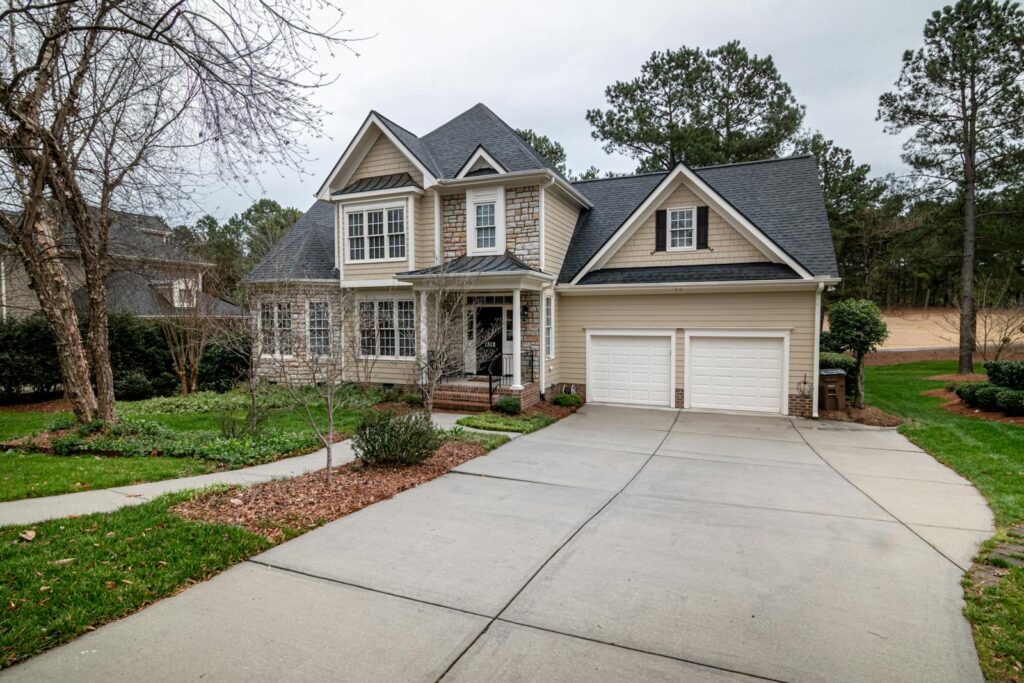
If you’re planning a custom home, the cash you already have tied up in your current house can be a powerful lever. Tapping home equity—via a HELOC, home equity loan, or Cash-out Refinance—can shrink the size of your construction loan, help you avoid PMI, pay early soft costs before your lender’s first draw, and generally de-stress the most chaotic months of a build. Done right, equity is the flexible fuel that keeps your schedule tight, unlocks better pricing, and protects your contingency. Done wrong, it’s a second anchor on your finances, layering variable-rate risk, double payments, and approval friction right when underwriters have their magnifying glass on your file.
This guide breaks down the rewards and risks of using home equity to fund a new build. You’ll learn the differences between HELOCs, home equity loans, cash-out refis, and niche options like bridge loans and pledged asset lines—and how each interacts with construction-to-permanent (C2P) financing, draw schedules, loan-to-value (LTV) limits, and your debt-to-income (DTI). Along the way, we’ll model real numbers, highlight common traps, and give you a practical, step-by-step framework to use equity with discipline, not bravado.
The Main Ways to Tap Home Equity
Before you decide whether equity belongs in your capital stack, get clear on the tools. Each option prices risk differently, and each one “plays” with construction financing in its own way.
Home Equity Line of Credit (HELOC)
A HELOC is a revolving line of credit against your current home, usually with a variable rate tied to prime and an interest-only payment during the draw period. For builders, the appeal is obvious: you can pull exactly what you need, when you need it, for permits, utility taps, soil tests, or deposits on custom windows and HVAC—expenses that often arrive before your construction lender releases the first draw. Because you pay interest only on what you’ve drawn, HELOCs naturally adapt to the lumpy cash profile of a build.
The trade-off is rate volatility and timing risk. If prime rises during your project, your HELOC payment jumps even if your draw balance doesn’t. HELOCs also have draw periods that end, after which the line converts to amortizing payments (often at the same variable rate). If your build runs long, that payment change can collide with other big costs. And because a HELOC sits in second-lien position behind your first mortgage, lenders may be picky about subordination later when you sell, refi, or convert.
Home Equity Loan (Second Mortgage)
A home equity loan is a fixed-rate, lump-sum second mortgage. You get payment predictability—one set amount each month, no surprises, usually over a 5–20 year term. That’s helpful if you’re the kind of planner who wants to budget an exact figure for a long window or if you expect rates to rise and prefer to lock costs now. It can also be smarter than a HELOC if you need a single known chunk—say, $50,000 to lower your C2P LTV from 85% to 75% and eliminate PMI.
The downside is you pay interest on all the funds from day one, even if you won’t deploy the full amount for months. If your project slips, you carry a fixed payment on money that isn’t moving the jobsite forward yet. Some loans also include prepayment penalties or don’t re-amortize cleanly if you pay them down early. And, like a HELOC, it adds to your DTI, which can ripple into stricter underwriting on the construction loan.
Cash-Out Refinance of Your Current Home
With a cash-out refinance, you replace your existing first mortgage with a larger one and pocket the difference. This consolidates payments (one loan instead of a first + a second) and may lower your blended rate if current rates are close to (or below) your existing rate. The cash can then fund early costs or reduce the construction loan amount to a lower pricing tier.
However, if you’re sitting on a low fixed rate from recent years, trading it for a higher current rate just to extract cash can be expensive. You may reset your mortgage term, incur closing costs, and lose optionality if rates fall later. And cash-out refis generally take longer than a HELOC approval—timing matters if bids and inspections are already on your calendar.
Bridge Loans and Cross-Collateralization
A bridge loan is a short-term, interest-only loan secured by your current home that’s meant to “bridge” the purchase or build of the next home before you sell the first. Some lenders also offer cross-collateralized structures that tie both properties to one facility. These can move fast and solve down payment or timing problems for land purchases and early construction.
But bridges are short, come with points and higher rates, and often carry balloon provisions. If your sale slips or your construction timeline expands, you can be forced to refinance under pressure. They’re best for tight, predictable windows where you control the dominoes.
Pledged Asset and Securities-Backed Lines
If you have a brokerage account, a securities-backed line of credit (SBLOC) or “pledged asset line” can act like a HELOC against your portfolio. Rates are often competitive, and underwriting focuses on assets, not income. The risk is market volatility: if your portfolio drops, you can face a margin call and be forced to add cash or sell at a bad moment. For conservative builders, that’s a stressor in the exact months you’re trying to keep things calm.
How Home Equity Changes Your Construction Financing Math
Where home equity shines is in ratio control. Construction lenders watch LTV, DTI, and reserves closely. A well-timed equity infusion can cut your required construction loan, improve pricing, and reduce friction throughout underwriting.
First, consider LTV. Many conventional C2P loans price best at ≤ 80% LTV against the lesser of cost or as-completed value. If your cost to build is $600,000 and the as-completed appraisal is $620,000, a cautious lender may size to the lesser—$600,000. At 80% LTV, your max loan is $480,000. If you can bring $120,000 of equity—through cash, land value, or funds from a HELOC or equity loan—you avoid PMI, lower your rate, and reduce your monthly payment for decades.
Second, equity can cover soft costs that lenders don’t always fund early: permits, plan review, utility taps, and mobilization deposits. Paying these from equity keeps your draw schedule for hard costs clean and your contingency intact for code-driven surprises, not cosmetic upgrades. This is exactly the kind of disciplined equity use underwriters love to see: money deployed where it protects the schedule and the collateral.
Third, equity can lower the rate lock risk on your permanent mortgage. Smaller loans qualify for better tiers, require fewer points to lock for longer windows, and carry less extension exposure if weather or Supply Chain Delays push your Certificate Of Occupancy into next month.
Key Rewards of Using Home Equity
The upside is real when you use equity with intention. Think in terms of speed, flexibility, and permanent cost savings.
The first reward is speed to mobilization. A HELOC lets you fund time-critical deposits—custom windows, engineered trusses, specialty doors—weeks before a construction lender would reimburse them. That single move can compress your schedule by a month or more, which saves interest-only carry on the construction loan and avoids remobilization costs. Speed on the jobsite is money in your pocket.
The second reward is pricing power. Lowering your construction loan amount can move you to a better pricing tier, eliminate PMI, and reduce points needed for long locks. Over 30 years, shaving even 0.25% off the permanent rate is worth tens of thousands of dollars. If equity is the difference between 83% LTV and 75% LTV, you’re not just paying less today—you’re paying less forever.
The third reward is budget stability. Equity acts as a shock absorber. If a soil report triggers engineered footings or a utility line re-route, you can solve the problem with cash and keep the draw cadence steady. Projects that maintain cadence finish faster, cost less in interest, and face fewer “surprise” conditions at conversion.
The Risks You Must Manage
If equity is the gas pedal, the risks are the guardrails. Ignore them and the same leverage that helped you start fast can make it hard to stop.
The biggest risk is collateral concentration. By borrowing against your current home to build the next one, you’ve put two roofs on the line. A job loss, a market dip, or a prolonged construction delay could jeopardize both. That’s not a reason to avoid equity—it’s a reason to size carefully and keep reserves.
The second risk is variable rate exposure—especially with a HELOC. Because most HELOCs float with prime, your payment can rise mid-build. Imagine a $60,000 average HELOC balance during a six-month window. At 8.50% APR, the rough monthly interest is 0.085 ÷ 12 = 0.0070833…. Multiply by $60,000 to estimate $425 for the month. If prime rises 1%, your monthly interest jumps by roughly $50–$60 without borrowing a dollar more. Plan for this and cap your exposure with a maximum draw that fits worst-case math.
The third risk is DTI creep. A HELOC or equity loan adds a monthly obligation that can squeeze your construction loan approval. Even if you intend to pay it off at the first draw or at conversion, underwriters look at today’s payment. Keep equity balances modest and short-lived, and coordinate the timing with your loan officer so no one is surprised at refresh.
A fourth risk is subordination and sale/refi friction. If you hold a HELOC when you go to sell or refinance, the second lien has to be subordinated or paid off. That can slow transactions, especially if the second-lien lender is slow to process. Build a simple plan: “HELOC draws will be paid down at Draw 2” or “we’ll clear it at sale,” so you never rely on last-minute concessions.
Finally, there’s the tax question. In many cases, interest on loans secured by your home is only deductible if used to buy, build, or substantially improve the property that secures the loan; using equity from Home A to build Home B may not qualify. Rules evolve and depend on your situation—talk to a tax pro for current guidance before you assume any deduction.
Smart, Low-Risk Ways to Put Home Equity to Work
Equity is most effective as a targeted bridge, not a permanent crutch. Aim for small, time-bound, project-critical uses with a written payoff trigger.
Start with a cash calendar for your build. Lay out months 1–12 with expected draws, interest-only estimates on your construction balance, known deposits, and your current housing costs. Mark statement closing dates for your HELOC or second mortgage so you know exactly when interest accrues and how to minimize it. The more you can see timing on one page, the easier it is to borrow less and repay faster.
Next, write rules for change orders. Use equity for must-do fixes (code, engineering, utilities), not for “nicer tile” while your contingency shrinks. If a change is discretionary, pay cash from savings or wait; don’t quietly convert a want into interest.
Finally, coordinate with your lender on stored materials. Some construction lenders will fund deposits or reimburse off-site materials with proof of insured storage and purchase orders. If yours does, you may not need equity for those items at all. If they don’t, plan a short HELOC draw that you’ll clear when the materials arrive and the next draw releases.
Real-World Scenarios (With Numbers That Add Up)
Let’s ground this in concrete math so you can feel the trade-offs.
Scenario A: HELOC as a 4-Month Bridge for Long-Lead Deposits
Suppose you need $25,000 now to lock windows and HVAC, and paying now avoids a 4-month delay. A HELOC at 12.00% APR carries rough interest of 0.12 ÷ 12 = 0.01 per month. If your average outstanding over four months is $15,000 (draw $25k, then partial reimbursement mid-way), monthly interest ≈ 15,000 × 0.01 = $150. Over 4 months, roughly $600. If skipping the delay prevents one remobilization and a month of idle interest on a $350,000 construction balance at 6.75% (monthly factor 0.0675 ÷ 12 = 0.005625 → 350,000 × 0.005625 = $1,968.75), the HELOC saved you far more than it cost.
Scenario B: Using Equity to Drop LTV and Kill PMI
Your cost basis is $580,000 (land + build + soft), and your as-completed value is $560,000. Lenders size to the lesser of cost or value → $560,000. At 90% LTV, max loan is 0.90 × 560,000 = $504,000 with PMI. If you use $56,000 of home equity to bring LTV to 80%, your loan falls to $448,000 and PMI goes away. Assuming a 30-year fixed at 6.50%, a rough factor is $6.32 per $1,000 of principal. Payment on $504,000 ≈ 504 × 6.32 = $3,184. Payment on $448,000 ≈ 448 × 6.32 = $2,833. That’s about $351/month saved—every month, for decades—plus the PMI you didn’t have to pay at the higher LTV.
Scenario C: Cash-Out Refi vs. HELOC When You Hold a Low First Mortgage
If your current first mortgage is 3.00% with 22 years left, and market rates are 6.75%, a cash-out refinance would reset your whole balance at more than double the rate just to extract, say, $80,000. In that case, a HELOC or fixed second for the small amount you need is usually cheaper, even if the second’s rate is higher. Keep the cheap first, add a small second, and plan to retire it at sale or conversion.
A Decision Framework You Can Trust
Use these questions to decide if tapping equity is a surgical strike or a slippery slope:
- How much, for what, and for how long? If you can’t define all three on paper, don’t borrow yet.
- What’s my worst-case payment? Model a 1–2% HELOC rate increase and confirm you still fit your budget.
- How does this affect DTI today? Not later, today—because that’s how underwriting will look at it.
- What’s my payoff trigger? Name the draw, sale, or conversion that kills the balance.
- Do I have 3–6 months of reserves after this? If not, scale the draw down.
- Am I solving a must-do? If it’s an upgrade, pay cash or wait.
- Will this lower my permanent rate or eliminate PMI? If yes, equity may be buying permanent savings.
- Am I risking two roofs? If your job or income is volatile, stay conservative.
- What’s my plan if the build slips 90 days? Rate locks, HELOC draw period, insurance—write it down.
- Have I checked tax treatment? Confirm with a pro; don’t assume deductibility.
Implementation Checklist (Copy/Paste and Fill In)
- HELOC/Second Setup: Limit: $________, Rate: ________, Draw period ends: ________.
- Purpose & Amount: $________ for ____________ (permits/windows/HVAC/utility taps).
- Payoff Trigger: Retire $________ at Draw __ on (date) ; remaining $ at conversion/sale.
- Budget Guardrails: Keep construction contingency ≥ ________% of hard costs; no equity for discretionary finishes.
- DTI Check: Current DTI with equity payment = ________%; construction lender max = ________%.
- Reserves: Post-draw reserves = $________ (≥ ______ months PITI).
- Docs & Reimbursement: Save invoices, POs, delivery tickets, Lien Waivers in a “Pre-Draw” folder to submit at next draw.
- Rate Plan: Construction lock length ______ months, float-down allowed? Yes/No. HELOC stress test at +2% = $________/mo.
- Exit Plan: If sale slips past ________ (date), reduce scope via ____________ or inject cash $________.
Owner-Builder vs. GC: Equity Discipline Matters Even More
If you’re acting as an owner-builder, lenders already view your file as higher-touch. Equity can help you front early costs, but it also compounds scrutiny. Keep draws granular, save photos and receipts, and pre-collect lien waivers. If you need to value-engineer, do it on paper before you pull equity, not after. A veteran GC can sometimes reduce total cost and timeline friction enough that you end up borrowing less overall, even after fees—because the project flows and surprises get handled inside the contract rather than outside your loan.
FAQs (Your Quick Answers)
Is a HELOC always better than a cash-out refi?
No. If current rates are near your first mortgage rate, a cash-out refi can simplify payments and potentially price better than a second. If your first is far cheaper than today’s rates, keep it and add a small second.
Can I roll a HELOC into my construction loan later?
Not automatically. C2P loans size to LTV against lesser of cost or value. You can often reimburse eligible project costs at draws, then pay down the HELOC with the draw proceeds—but that requires clean documentation and your lender’s okay.
Will equity use hurt my construction approval?
It can if it spikes DTI or looks like scope creep. Keep amounts small, time them before pre-approval or after closing (with a clear payoff plan), and communicate with your loan officer.
Is the interest tax-deductible?
Only sometimes, and rules depend on use of funds and which property secures the loan. Confirm with a tax professional.
What’s a safe cap on equity exposure?
Enough to maintain schedule and lower LTV, not enough to threaten reserves. Many borrowers keep equity draws under 10–15% of total project cost, repaid at the first or second draw.
The Bottom Line
Using home equity to fund a new build can be the smartest money you deploy—if you treat it like a scalpel, not a sledgehammer. The rewards are compelling: faster mobilization, cleaner draws, lower LTV and PMI, and permanent savings on your end mortgage. The risks are equally real: variable rates, doubled-up obligations, DTI pressure, and collateral stacked on two roofs instead of one.
Win the trade by being boringly methodical. Borrow only what speeds the schedule or improves permanent pricing. Put a payoff trigger in writing. Keep contingency sacred for code and soil, not stone and steel. Coordinate with your lender on stored materials so reimbursements happen fast, and keep a cash calendar that makes timing your friend, not your enemy. Do that, and your equity becomes what it should be: a precise, powerful tool that helps you build the house you want—without taking on debt you don’t.